📷 Mikhail Nilov, Pexels License, via Pexels
When to dive in Malé, Maldives?
Around the Maldivian capital lies one of the most varied and accessible dive regions of the archipelago. North Malé and South Malé bring together thilas, channels, wrecks, cleaning stations and drift dives, with conditions that change with the rhythm of the two monsoons.
✈️ How long does it take to get there?
Indicative durations including stopovers, for a weekday departure outside school holidays. From another city, allow 1 to 3 extra hours with a connection.
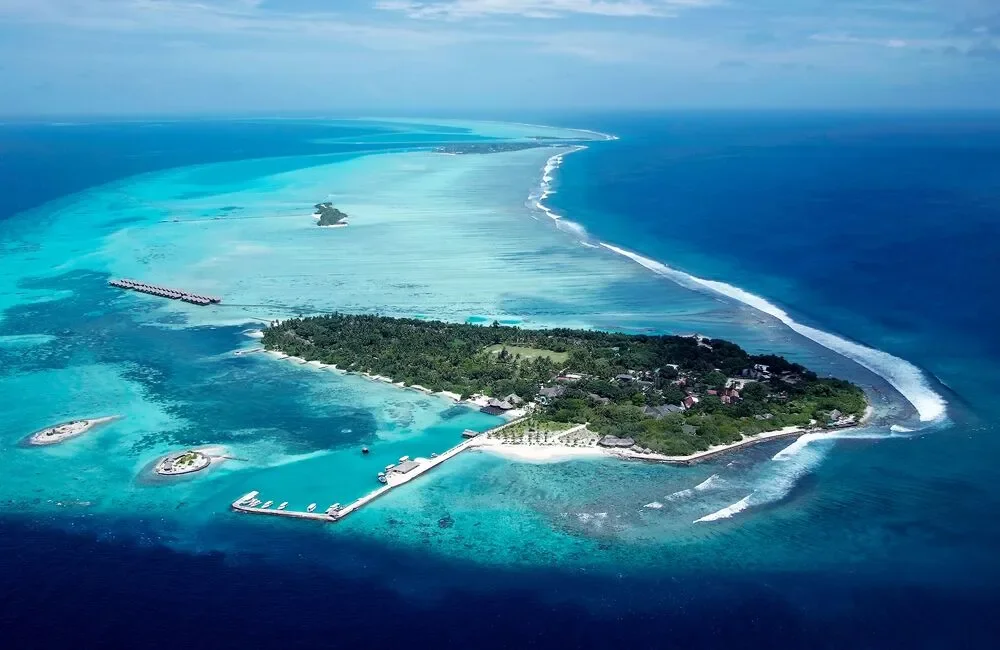
The Malé atoll is divided into two main groups, North Malé and South Malé, separated by the Vaadhoo Kandu (channel). Their proximity to Velana International Airport makes them one of the easiest regions to reach for diving in the Maldives.
It is also one of the historic diving areas of the archipelago, with many resorts, local islands and centers letting you explore the reefs on day trips.
But North Malé and South Malé do not have exactly the same personality.
North Malé offers a great diversity of thilas, reefs, wrecks and cleaning stations visited seasonally by mantas. South Malé is more marked by its large channels, where currents can concentrate grey reef sharks, eagle rays, tuna and schools of fish.
This diversity lets you go from relatively sheltered reefs to much more dynamic drift dives without completely changing region.
Climate and seasons
Temperatures vary little over the year. The air stays warm and the water temperature generally holds at around 27 to 30 °C, which allows diving all year round.
The main difference is between the dry season and the wet season.
The dry season, mainly from January to March, generally offers more stable weather and less rain. December and April are more transition months.
The wet season, from May to November, brings more rain, wind and more variable surface conditions. Showers can be heavy without taking up the whole day.
Underwater, this seasonality also influences currents and the concentration of plankton. Water richer in plankton can occasionally reduce visibility in some areas, but it also favors certain encounters, notably with mantas.
In Malé there is therefore no period when diving becomes bad: the seasons mostly change the conditions and the animals you can look for.
Diving conditions
Current is one of the main things to take into account around Malé.
In the channels, its direction and strength vary notably with the tides and the movements of water between the ocean and the inside of the atolls. When it is favorable, it concentrates fish and pelagics at the channel entrances.
This setup is particularly characteristic of South Malé, where several large channels open directly onto the ocean. Areas such as Guraidhoo or Kandooma are known for their drift dives and the possible presence of grey reef sharks, eagle rays and large schools of fish.
In North Malé, profiles are more varied. Some reefs allow relatively calm dives, while thilas or exposed areas can have much stronger currents.
Visibility is generally good, but it varies with the season, the current and the side of the atoll explored. Perfectly crystal-clear water is not always what you are looking for in the Maldives anyway: more plankton can also mean more activity for certain species.
It would therefore be misleading to give Malé a single level. The chosen site and the conditions of the day matter more than simply diving in the north or the south.
Marine life
Reef fauna is present all year round: butterflyfish, angelfish, moray eels, Napoleon wrasse, turtles, fusiliers, snappers, jacks and barracuda move around the reefs and thilas.
In areas affected by current, encounters take on another dimension. Grey reef sharks, whitetip reef sharks, eagle rays and tuna can take advantage of these water movements and gather around the channels.
South Malé is particularly interesting for this type of dive, although sharks are obviously not reserved for this part of the atoll.
Mantas
Mantas give North Malé a particularly interesting seasonality.
At Lankan Manta Point, in the southeast of the atoll, they visit the cleaning station mainly during the wet season, with a particularly interesting period from May to November.
When the season changes, it does not mean the mantas disappear from the whole region. Their distribution changes with the currents and plankton concentrations. Other areas, such as Rasfari North, become interesting during the drier period, between December and April.
In Malé as elsewhere in the Maldives, looking for mantas is therefore as much about choosing the right area as the right month.
Where to dive around Malé?
North Malé
North Malé concentrates several historic Maldivian dive sites.
Banana Reef is one of the best known, with terrain made up of reefs, overhangs and fish-rich areas. HP Reef and Nassimo Thila offer other landscapes, with coral formations, overhangs and areas where current concentrates marine life.
The region also has a more pelagic side with Lankan Manta Point, visited seasonally by mantas, as well as several reefs where sharks and rays can be met.
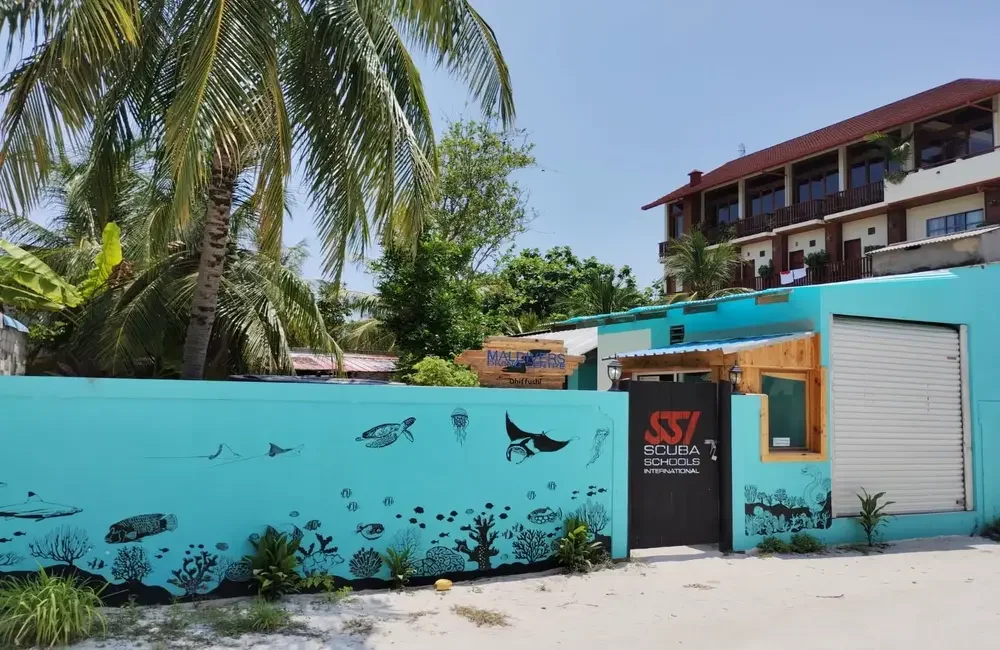
Islands such as Himmafushi, Hudhuranfushi and Dhiffushi serve as different bases for exploring this part of the atoll.
North Malé wrecks
North Malé also lets you change atmosphere completely with several wreck dives.
The most famous is the Maldives Victory, a cargo ship sunk in 1981 near the airport. The wreck goes down to about 35 meters and has gradually blended into the marine environment, now attracting many fish.
Its depth and possible currents make it a more demanding dive than the most sheltered reefs of the atoll.
South Malé
Beyond the Vaadhoo Kandu, South Malé offers diving more structured around the channels.
Guraidhoo Kandu, Kandooma Thila and Cocoa Corner are among the best-known areas. When the current is favorable, grey reef sharks, eagle rays, tuna and schools of fish can gather around channel entrances and exposed features.
The scenery is not limited to the kandus, however. Kandooma Caves stands out for its large overhangs, while other sites combine reefs and more sheltered features.
Islands such as Guraidhoo, Rannalhi and Vadoo let you explore different parts of South Malé.
This concentration of different dives in a relatively small area is one of the region's great strengths: you can calmly watch reef life on one dive and find yourself a few hours later in the current watching sharks go by.
FAQ
When is the best time to dive in Malé?
Diving is possible all year round.
January to March is the driest period, with generally more stable weather and less rain. May to November is wetter and can bring more wind and more variable visibility depending on the area.
But this second period has its advantages too: it notably corresponds to the manta season at some sites in North Malé.
The best period therefore depends above all on the type of dive and the encounters you are looking for.
North Malé or South Malé: which should you choose for diving?
The two offer quite different experiences.
North Malé stands out for the variety of its thilas, reefs, wrecks and seasonal manta sites. South Malé has an identity more focused on channels, currents and encounters with sharks and other pelagics.
There is therefore no inherently better area: the choice depends mostly on the kind of diving you want.
When can you see mantas in Malé?
At Lankan Manta Point, in North Malé, mantas are mainly seen from May to November, during the wet season.
When seasonal currents change, other areas can become more interesting. Sightings are possible around Rasfari notably during the period from December to April.
Mantas therefore do not simply disappear from Malé on a precise date: they mostly change area over the year.
Where can you see sharks around Malé?
Grey reef sharks and whitetip reef sharks can be met in different parts of the region.
The South Malé channels are particularly interesting when currents are favorable. Guraidhoo and Kandooma are among the areas where sharks, eagle rays and other pelagics can take advantage of water movements.
As always with wild animals, the current can show up without the sharks having received the invitation.
Can you start diving in Malé?
Yes.
Not all Malé sites are current-swept channels. Both atolls have reefs and more sheltered areas that let you discover diving in accessible conditions.
Conversely, some channels and some thilas can require good control of buoyancy, drift dives and ascents in open water.
The choice of site should therefore be matched to the diver's level and above all to the conditions of the day.
Can you dive in Malé during the wet season?
Yes, no problem.
The period from May to November brings more rain and wind, but diving goes on. Conditions can be more variable and visibility sometimes reduced when the water is loaded with plankton.
This period even has a particular interest in North Malé, since it corresponds to the seasonal presence of mantas at Lankan Manta Point.
In the Maldives, a slightly less blue sky can very well come with a much more interesting dive.
Partner dive centers in this destination
+ List my centerBook directly with our verified dive centers.